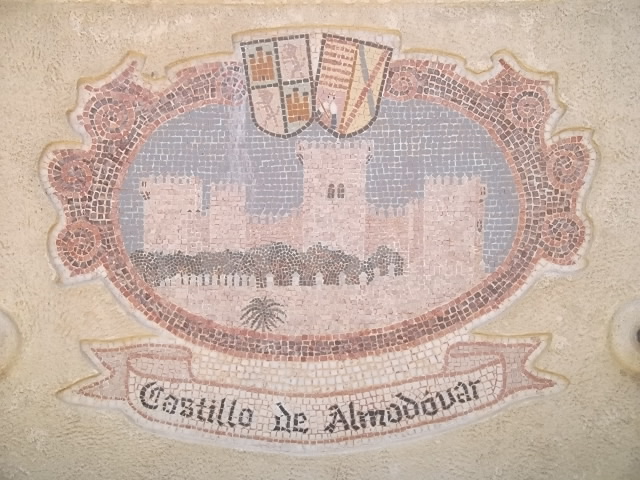
Castillo de Almodóvar del Río- Córdoba.

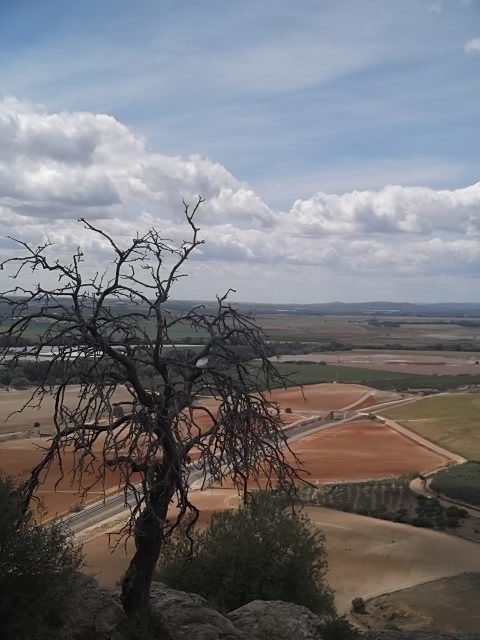
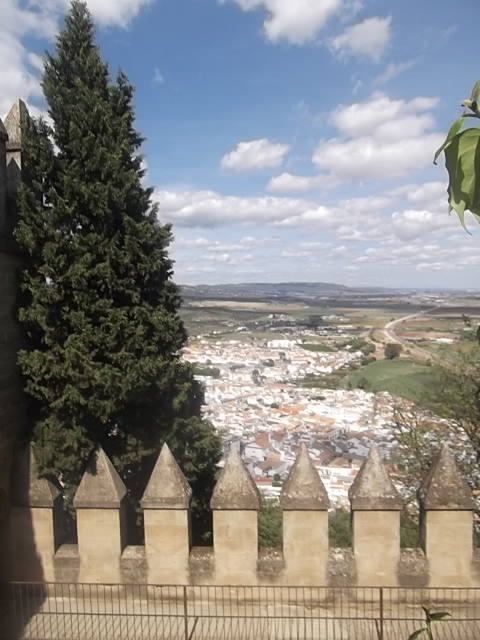
This astonishing castle, built on a hill of stone that is roughly 820ft high, was built by the Arabs in 720. The castle provides an authentic insight into the history and culture that is key to the region of Córdoba. In it´s history it has been in the possession of Iberians, Romans, Muslims and Christians, each of them having left their own individual stamp on this extravagant castle. Castillo de Almodóvar, to me, serves as a reminder of this regions unique culture and highlights how it has been heavily influenced by other cultures throughout the centuries.
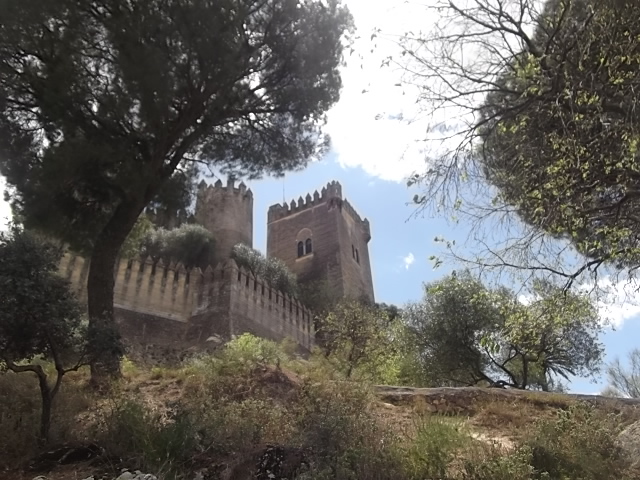
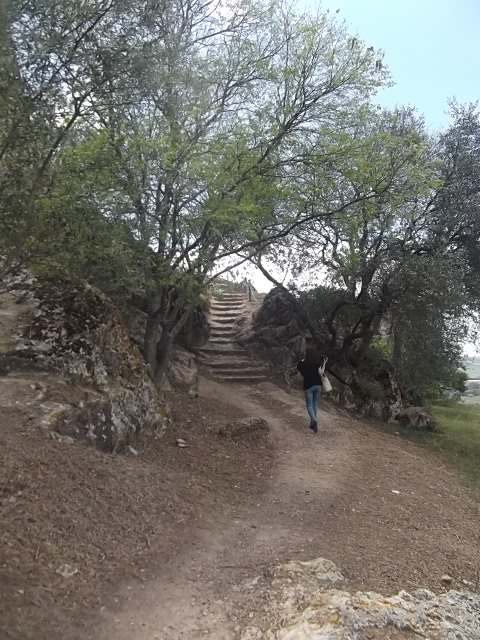
The journey up to the castle is most certainly a breathtaking one. It took me over half an hour to get from the foot of the hill up to the castle, not due to the distance but rather the sheer beauty there is to behold on the way up. The setting truly is picturesque. With the tone of the upward trek being set by the charming whitewashed houses of Almodóvar del Río contrasted against the spectacularly rich spring colours of the mountainous countryside and the ruggedness of the various pathways meandering their way up the hillside; it´s hard not to be blown away by what the area has to offer.
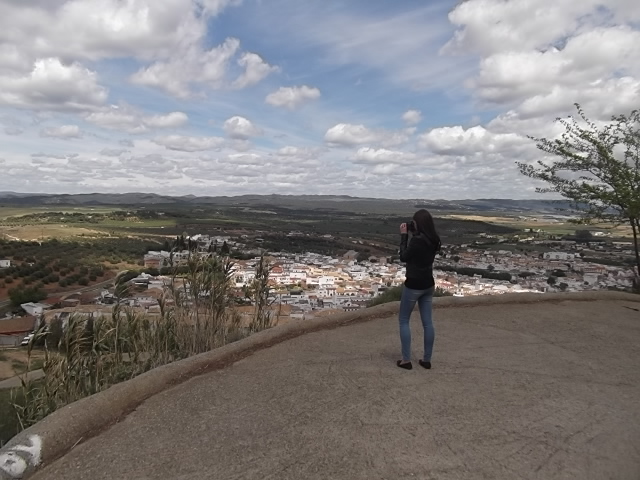
 

By the time I reached the castle I felt exhilarated and quiet excited to see what awaited me behind the enticing castle walls. I am delighted to say that I wasn´t disappointed in the slightest! Once at the entrance I happily paid the €5 entrance fee and followed the well laid out arrows around the castle. I must say I was impressed at how well maintained this ancient building was and also how true to it´s history it had remained.  It´s authenticisity added to it´s character and made it amazing to watch it´s story unfold before my eyes with such beauty and charm. While walking up to the castle I honestly thought that the views that unfolded before me couldn´t be topped. However, once I reached the highest point in the castle, the towers, I was proven wrong and completely blown away by what lay before me. The colours that spread out across the landscape were so rich and glorious that I couldn´t take my gaze away from them.

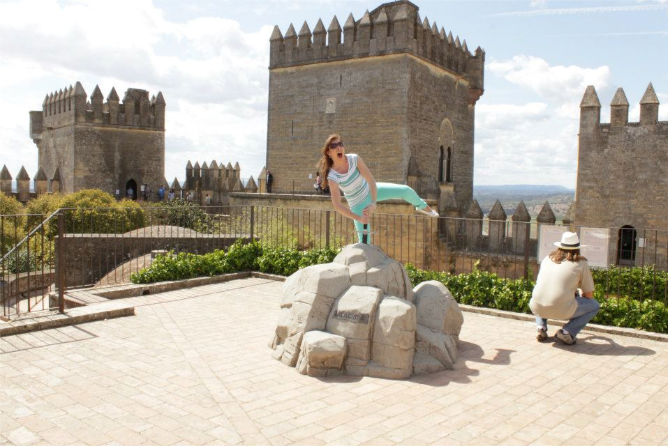
As we ventured through the castle we discovered an area with a sword in a stone, for me, this was one of the best parts of the trip. While we were there a beautiful yellow and black butterfly fluttered around us and then kindly, as if it knew all about my obsession with butterflies, rested by my foot for a good five minutes allowing me to take some beautiful pictures of it.
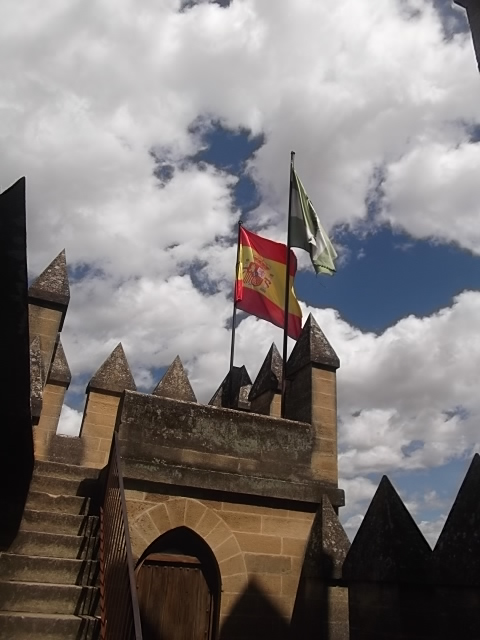
I found myself completely lost in the splendour that surrounded me, and the hours that we spent up there only felt like minutes. We had so much fun between taking in all the history and the beauty, and finding our own fun with wooden swords, fake spiders and bones ( at least I hope they were fake!) we didn’t have a single dull moment on our spontaneous journey through the castle walls!

If you haven´t ventured to Castillo de Almodóvar yet, then I really recommend a visit. With history, views, dramatisations ( I didn´t get to see any) restaurants and taverns it definitely has something to offer everyone! Just remember to check the bus timetables throughly before you embark on your journey!
Would you like to visit Castillo de Almodóvar?

Thanks for reading and I hope you enjoyed it!

To find out more about Almodóvar del Río and the Zoco that took place there read my other post here!

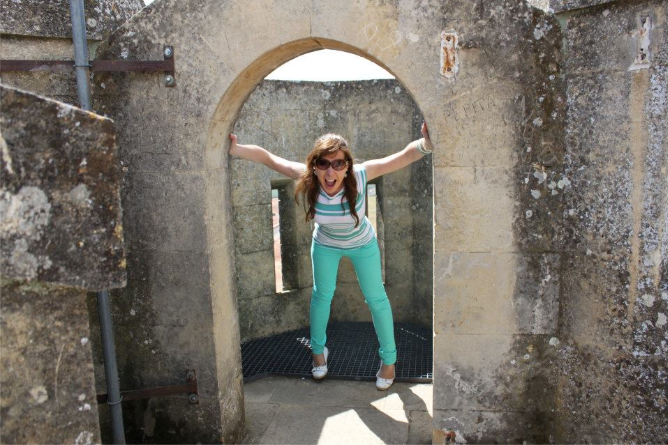
While all the photos above are my own, the last three, obviously enough, weren´t taken by me! Their credit goes to my dear friend, and talented blogger Carly! Just click on her name to check out her amazing blog filled with breathtaking photos!

Giana xoxo

Passion fashion!

Fashion is most definitely an integral part of the culture in Spain. So much so that I have dedicated an entire section to it. It has to be said that Spain is home to some of the most stylish people I have ever encountered. They take such pride in their clean-cut elegant image and carry themselves with such dignity and composure that it´s hard not to admire them, sometimes even envy them!

Image is everything to Spanish people, not in a conceited egotistical manner, but in a self-respecting one. In Spanish culture, your appearance says a lot about you, people value a person who looks after and respects themselves.

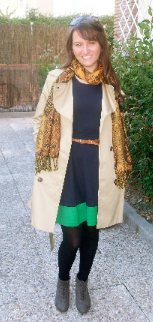
Younger generations, being the trend setters that they are, are quite experimental with their clothes. They often opt for bold colours and prints that are well cut and flattering to their figures, whereas, older generations play it safe with sleek, well-coordinated outfits that accentuate their figures and their poise.

Click on image to go to original website

Accessories are the key to every Spaniards outfit, you will rarely see a unaccessorised Spaniard roaming the streets. Accessories are like a personal stamp on each outfit. The accessories range from scarfs, over-sized statement jewellery and detailed tights, to sunglasses, leather jackets and over-sized bags or clutches. It´s fascinating to see how people utilise these items to enhance their look and make them stand out from the crowd. With their flair for accessories they´re guaranteed not to blend into the crowd, or bump into someone with the same outfit as them!

While it´s true that Spain is home to some of the most acclaimed fashion designers, designers such as Manolo Blahnik, Cristobal Balenciaga and Paco Robanne, Spanish people care more about the quality of clothes than the designer. Brands such as Zara, Mango, Cortefiel, Adolfo Dominguez and Massimo Dutti provide quality at affordable prices and prove to be very popular with this fashion conscious culture.

I can honestly say that, as a fashion lover, I couldn´t have found a country that is more suited to me than Spain. Hopefully, throughout my journey here, I can learn the art of elegance and poise that comes so naturally to these artistic people. In this section I plan to document the Spanish trends from season to season and show how I´ve embraced them and hopefully put my own personal style stamp on them!

This slideshow requires JavaScript.

Hope you´ve enjoyed this post!

What do you think? Would you wear Spanish style?

Giana xoxo

*While the images featured in the side-show are my own, I have taken the two photos of the women featured in the centre of the blog from google images and, therefore, cannot take credit for those two, I hope to replace them with my own images once I can!

Holy week- Alicante.

One of the most notable things about Spanish culture is its religion. In order to understand the Spanish culture you need to understand their Catholic environment. So, due to perfect timing, I have chosen Holy Week, or Semana Santa as it´s known in Spain, as the starting point for my Spanish Culture section.

Holy Week in Spain is undeniably a unique event. Being Catholic myself I have celebrated Holy Week before. However, it is safe to say, I have never experienced such a genuine atmosphere of mourning like the one I have witness here. While I´ll admit it truly is a breathtakingly beautiful experience filled with emotion, there were times when I became overwhelmed by the dramatics of the situation, and felt a little uncomfortable.

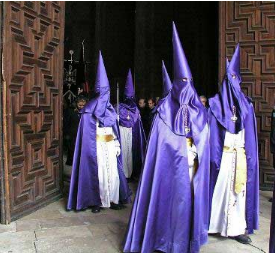
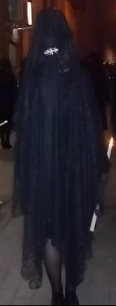
In the procession I witnessed the marchers, clad out in white robes with blue capes and pointed blue hoods somewhat reminiscent of the Klu Klux Klan, carry elaborate sliver candlesticks. These marchers were closely followed by elegant female mourners dressed in black with the most delicate lace veils running from their heads to the ground.

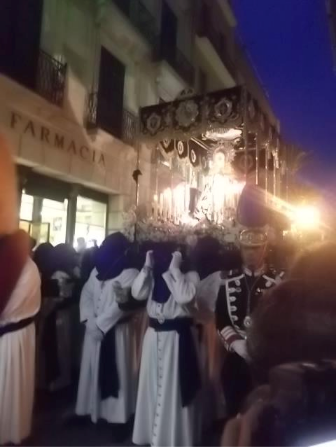
Behind these women was the wooden platform, or anda as it´s know in Spanish, which was carried by 36 men, known as carriers or cucuruchos, from a religious fraternity. On this magnificently ornate platform there was an amazing statue of Magdalena surrounded by flowers and candles. It was astonishing to see the skill, coordination and technique it took to negotiate this platform around sharp turns on narrow little streets. It really was  a mesmerizing sight to see.

The procession was such a huge credit to the community and was carried out with solemnity and grace. To me it really got to the heart of Spanish culture and depicted their passion, their strength, their commitment to religion and their pride in a uniquely artistic way. While I may never fully understand the mourning period, I will always admire and respect it and feel grateful to be an onlooker to such an exceptional event.

What is your opinion on Holy Week in Spain?

Giana xoxo